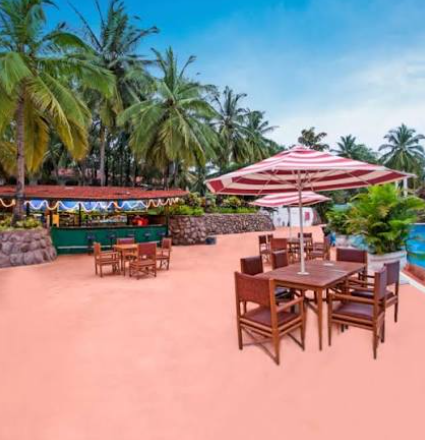
A resort guest does not just book a room. They book four nights, a couples massage on day two, a sunrise dive, and dinner every evening. At Acquaint Softtech, most resort projects begin with a discovery workshop, because the hardest part is not the code; it is mapping how rooms, spa, activities, and dining already depend on each other.
A resort booking system brings those pieces into one flow. It sells packages, applies meal plans, schedules treatments and activities against real capacity, and posts every charge to one guest folio. This guide covers package pricing, meal plans, scheduling, resource rules, integrations, and cost.
The approach draws on booking and operations platforms that Acquaint Softtech has delivered as an Official Laravel Partner, with 1,300+ projects, 70+ in-house engineers, and clients across the USA, UK, Europe, and Australia who get a dedicated team within 48 hours of a brief.
What a resort booking system is
A resort booking system is software that sells rooms together with meals, treatments, and activities, schedules each service against available staff and facilities, and keeps every charge on one guest account. A standard hotel booking engine sells rooms; a resort system sells the whole stay.
Why standard hotel software falls short
Most hotel booking engines treat extras as simple add-ons with no capacity. At a resort, a massage needs a qualified therapist and a free treatment room at a specific time. Without scheduling logic, the front desk sells slots that do not exist.
Designing packages that price correctly
A resort package bundles a room with extras at one price, and the system must price each component correctly and split the revenue back to each department. Components are priced per night, per person, or per stay, and the package total is built from them.
Fixed and dynamic packages
Fixed packages, such as a three-night spa escape, are simple to market. Dynamic packages let guests assemble their own stay from rooms, meals, and activities. Support both from the same component catalog, so pricing stays consistent.
Allocate revenue by department
Finance needs room revenue separate from spa and food revenue, even when the guest pays one package price. Store an allocation rule for every component, and confirm tax treatment with your accountants, since some jurisdictions tax accommodation, food, and services differently.
Meal plans as entitlements
A meal plan defines which meals are included in the rate, and the system should treat it as an entitlement the guest consumes during the stay. The standard plan types are well established across the industry.
| Plan | What it includes |
| Room Only (RO) | Accommodation with no meals |
| Bed and Breakfast (BB) | Breakfast daily |
| Half Board (HB) | Breakfast and dinner daily |
| Full Board (FB) | Breakfast, lunch, and dinner daily |
| All-Inclusive (AI) | All meals, and usually selected drinks and snacks |
Make the restaurant system aware
When a half-board guest orders dinner, the point-of-sale (POS) system, the restaurant’s ordering and billing system, should recognize the plan and apply the included amount, charging only extras. Capture dietary needs at booking and pass them to the kitchen with each reservation.
Scheduling spa treatments and activities
Treatments and activities are booked against limited resources: people, rooms, equipment, and time. The scheduler must satisfy all of them at once before it confirms a slot.
1. The guest chooses a treatment or activity and a preferred time.
2. The system finds a qualified, available staff member.
3. It finds a suitable free room or piece of equipment.
4. It adds buffer time for cleaning and setup.
5. It checks guest rules such as age limits or a completed health form.
6. It holds the slot and posts the charge or deposit to the folio.
A scheduler that suggests alternatives
When the requested slot is full, the system should offer the nearest workable alternatives rather than a flat refusal. Teams that hire Python developers can build this as a constraint-based scheduler that balances staff workloads and fills gaps in the day.
Let guests book before arrival
Popular treatments sell out, so open booking before arrival and decide how much capacity to reserve for in-house guests versus day visitors.
Resource rules that prevent double-booking
Double-bookings at a spa usually come from rules that live in someone’s head. Store them in the system so every booking channel applies them identically.
| Rule | Example |
| Skill matching | Only certified therapists offer hot stone treatments |
| Buffer time | Fifteen minutes to reset a treatment room |
| Capacity | A yoga class capped at twelve guests |
| Weather dependency | Snorkel trips cancelled above a set wind speed |
| Age limits | Adults-only pool sessions or activities |
| Guest preference | Requested therapist, where available |
Handle weather automatically
When an outdoor activity is cancelled, the system should notify affected guests, offer alternative times, and release or refund the booking without staff chasing each person.
Connecting PMS, spa, POS, and the guest app
A resort system works only if the property management system (PMS), spa system, and restaurant POS share one guest profile and one folio. Every package component, treatment, and meal should post to the same account, so checkout is a single bill.
The guest app as itinerary
Guests want their whole stay in one place. A guest app built through Flutter app development can show the itinerary, let guests book treatments and activities, and send reminders on iOS and Android from one codebase.
What it costs to build
The cost depends on how many departments the system covers and how complex the scheduling rules are. Packages and spa booking cost far less than a full activity scheduling engine with POS integration.
| Scope | What you get | Typical range (USD) |
| MVP system | Packages, meal plans, spa booking, PMS folio posting | $18,000 to $40,000 |
| Full platform | Activity scheduling engine, POS meal entitlements, guest app, day visitors, reporting | $45,000 to $100,000 |
Where the savings are
Start with packages, meal plans, and spa booking, then add activities, POS entitlements, and the app. This staged build runs at up to forty percent cost savings versus Western agencies, at blended rates of roughly twenty-five to forty-nine US dollars per hour.
Proof: replacing disconnected tools with one system
Most resorts run rooms, spa, and activities on separate tools linked by spreadsheets. Acquaint Softtech solved the same fragmentation for Salter Grange, a London specialist recruitment firm, starting with discovery and workflow mapping. The account below is drawn from the client’s 5.0 out of 5 Clutch review.
| What Salter Grange needed | What Acquaint Softtech built | The resort equivalent |
| Replace multiple disconnected tools | One centralized management system | One system for rooms, spa, and activities |
| Match the right person to each job | A role-matching engine | Matching qualified therapists to treatments |
| Keep everyone on schedule | Automated reminders and alerts | Treatment and activity reminders |
| Work away from a desk | Desktop and mobile access | Staff updates from the spa or activity desk |
The client reported far less operational friction and faster role closures because everyone saw the whole cycle in one place. That was recruitment, not hospitality, and we say so plainly; the unification problem is the same.
FAQs
What is a resort booking system?
Software that sells rooms together with meals, treatments, and activities, schedules each service against real capacity, and keeps every charge on one guest folio.
What is the difference between half board and full board?
Half board includes breakfast and dinner each day. Full board includes breakfast, lunch, and dinner each day.
How do you prevent spa double-bookings?
Check staff qualifications, room availability, and buffer time together before confirming any slot, and apply the same rules across every booking channel.
How should resort packages be priced?
Build each package from priced components per night, per person, or per stay, and allocate revenue back to rooms, spa, and dining for accurate reporting.
Can guests book spa treatments before arrival?
Yes, and they should. Pre-arrival booking secures popular slots and helps the spa plan staffing, while some capacity can stay reserved for in-house guests.
