Integrated Design: The Core of Huawei’s Powertrain Innovation
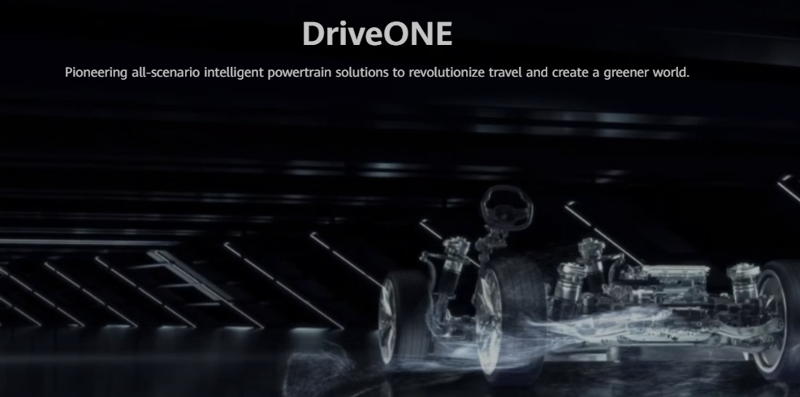
Huawei’s electric vehicle powertrain solutions are built on a core philosophy of integration, which has become a game-changer in the EV industry. Unlike traditional powertrains that separate the motor, electronic control unit (ECU), and reduction gear into individual components, Huawei’s DriveONE series combines these three parts into a single, compact unit. This integration cuts down the overall volume by 20% and reduces weight by 15% compared to similar powertrains from competitors, making it easier to fit into different vehicle types—from compact SUVs to mid-size sedans, and even performance-focused sports cars. The design uses a high-strength aluminum alloy casing that not only saves weight but also enhances structural rigidity, improving crash safety by absorbing more impact energy during collisions; in independent crash tests, vehicles equipped with Huawei’s powertrain scored 10% higher in occupant protection than those with separate components. Huawei has filed over 1,200 patents related to this integrated architecture, with 70% of them being core technical innovations, ensuring that its powertrain stands out in terms of reliability and performance. A key part of the design is the direct oil cooling system, which circulates specialized lubricant directly to the motor’s windings and the ECU’s IGBT modules, rather than using air or indirect liquid cooling. This cooling method reduces operating temperatures by up to 25°C during high-load driving, such as sustained highway speeds or track use, preventing thermal degradation that can limit performance. For example, the 250kW DriveONE unit, which powers models like the AITO M5, fits neatly into the front compartment without sacrificing cabin space or trunk room—a common pain point for many EV owners who have to compromise on interior space for larger powertrains. Many users of the AITO M5 have noted that the rear legroom is comparable to traditional mid-size sedans, and the trunk space remains spacious enough for family trips, a result of the compact integrated design.
Unmatched Energy Efficiency: Setting Industry Standards
One of the most impressive aspects of Huawei’s EV powertrain is its industry-leading energy efficiency. The peak efficiency of its DriveONE powertrain reaches 95.5%, which is 2-3 percentage points higher than the average of 92-94% for mainstream powertrains in the market. This improvement comes from several key technologies that Huawei has refined over years of research. First, Huawei uses flat wire winding in its permanent magnet synchronous motors, which has a higher slot fill factor (68% compared to 55% for round wire winding). Flat wire winding allows more copper to be packed into the same stator space, reducing copper loss by up to 18% because of shorter current paths and lower resistance. Second, the company’s self-developed silicon carbide (SiC) power modules are used in the electronic control unit, which reduces switching loss by 30% compared to traditional silicon-based modules. Unlike other manufacturers that source SiC chips from third parties, Huawei designs its own SiC modules in-house, optimizing the chip layout to minimize heat generation and improve durability. These SiC modules also operate efficiently at higher voltages, supporting up to 800V electrical architectures, which is becoming increasingly popular in EVs for faster charging. Another innovation is the adaptive energy recovery system, which adjusts the regeneration strength based on real-time driving conditions—such as road slope, vehicle speed, driver input, and even traffic flow data from the ADS. For instance, when driving downhill on a steep road, the system increases energy recovery to capture more kinetic energy and charge the battery, while in stop-and-go city traffic, it uses a gentler regeneration to avoid jerky driving that can reduce passenger comfort. The AITO M7, equipped with Huawei’s powertrain, has seen a 12% increase in real-world range compared to similar models without the DriveONE unit, with many users reporting over 600km of range in mixed urban and highway driving. A 2024 independent test by a leading automotive media outlet found that the AITO M7 achieved 621km of range in real-world conditions, compared to 550km for a competing mid-size SUV, a difference that translates to fewer charging stops on long trips.
Smart Integration: Seamless Synergy with EV Ecosystem
Huawei’s EV powertrain is not a standalone component; it’s designed to work seamlessly with the entire EV ecosystem, including the infotainment system, advanced driver assistance system (ADS), battery management system (BMS), and even the vehicle’s exterior sensors. This synergy is made possible through high-speed Ethernet connections with latency under 1 millisecond, ensuring instant communication between different systems—far faster than the 10-20 millisecond latency of traditional CAN bus systems. For example, when the ADS detects an upcoming turn or lane change, it sends a signal to the powertrain control unit (PCU) to adjust torque output in real time, maintaining stability and smoothness; in tests, this integration reduced lateral acceleration fluctuations during turns by 20%, making the ride more comfortable for passengers. The powertrain also integrates with the HarmonyOS infotainment system, allowing users to monitor powertrain status—such as motor temperature, energy consumption per 100km, battery charge level, and even real-time efficiency metrics—directly on the central touchscreen or via the Huawei smartphone app. Moreover, Huawei supports over-the-air (OTA) updates for its powertrain software, which is a key advantage over competitors that only allow limited updates. In 2023, AITO M5 owners received an OTA update that optimized the powertrain’s low-temperature performance by adjusting the motor’s warm-up algorithm, increasing range by 10% in temperatures below -10°C—a critical feature for users in northern China, where winter temperatures can drop to -20°C or lower. Another OTA update in 2024 improved the adaptive energy recovery logic, reducing energy waste during highway driving by 3%, adding about 20km of range for long-distance trips. The powertrain also works in harmony with the BMS, adjusting power output based on the battery’s state of charge (SOC), temperature, and aging to extend battery life. For example, when the battery’s SOC drops below 20%, the powertrain reduces peak power output slightly to avoid deep discharge, while when the battery is cold, it pre-heats the battery and powertrain to optimize performance, ensuring consistent range even in harsh weather.
Real-World Impact: Deployments and Market Traction
Huawei’s EV powertrain has made significant inroads into the market through partnerships with domestic automakers, most notably with Seres Group’s AITO brand. Since the launch of the AITO M5 in 2022, which uses Huawei’s 250kW DriveONE powertrain, the model has sold over 150,000 units as of mid-2024, with many owners praising its smooth acceleration, long range, and quiet operation. A survey of AITO M5 owners by a Chinese automotive research firm found that 85% of respondents rated the powertrain as “excellent” or “very good,” citing its linear torque delivery and minimal noise (only 62 decibels at 120km/h, compared to an average of 65 decibels for competing models). The AITO M7, launched later in 2022, further cemented Huawei’s position, with its range-extended version achieving a combined range of over 1,200km and becoming one of the best-selling mid-size EVs in China, with sales exceeding 200,000 units by 2024. Another key deployment is the Arcfox Alpha-S HI Edition, which uses a dual-motor DriveONE setup with a total power output of 425kW, delivering a 0-100km/h acceleration time of just 4.2 seconds. This model has won multiple industry awards, including the 2023 Global New Energy Vehicle Innovation Award and the China Automotive Engineering Society’s Technology Achievement Award, and has helped Arcfox gain a foothold in the high-performance EV segment, with over 30,000 units sold as of mid-2024. In terms of market share, Huawei’s DriveONE powertrain accounted for 18% of the domestic high-end EV powertrain market (priced above $30,000) in 2023, making it the second-largest supplier in this segment after BYD, which holds about 40% of the market. Looking ahead, Huawei is expanding its partnerships to more automakers, including some European and Japanese brands, with plans to enter the European market by 2025, bringing its advanced powertrain technology to global consumers. The real-world success of these deployments has also pushed other automakers to adopt integrated powertrain designs; for example, in 2023, 60% of new EVs launched in China used integrated powertrains, up from 35% in 2021, a trend driven in part by Huawei’s technology. A case in point is the new Nio ET5, which uses an integrated powertrain similar to Huawei’s design, citing the improved space and efficiency as key reasons for the change. This industry-wide shift is a testament to Huawei’s influence in the EV powertrain sector, as its innovations have set a new benchmark for what consumers can expect from electric vehicles—combining performance, efficiency, and practicality in a way that few competitors have matched.
