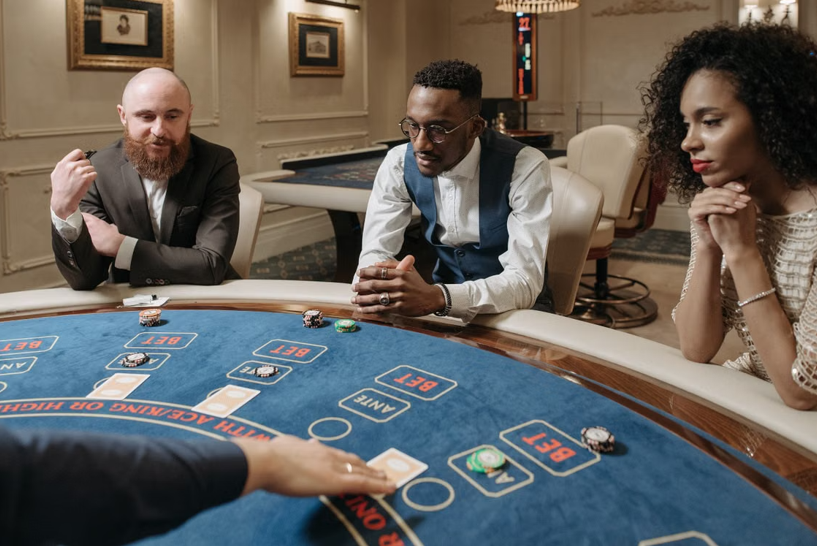
Anyone who has watched enough Hindi cinema knows the scene. A back room, a bare bulb, a circle of men leaning over a cloth, and one card turned over in the middle. Directors keep returning to it because the game on screen needs no explanation. You see a card, you see two sides, and you feel the tension of waiting for a match.
That game is Andar Bahar, and it is easier to follow than most of what film crews put on a card table. Anyone curious about how the rules work in practice can watch a live round of the andar bahar game and compare it with what the movies suggest. The pace is fast, the dealer narrates every step, and a round is over in well under a minute.
What happens in a single round
The whole game hangs on one card. Face up and centred between the two betting areas, it sets the one value everybody will be hunting for. The two Hindi words in the name translate as “inside” and “outside”, and those label the halves of the layout that every participant must choose between before a card moves.
Then the dealer lays cards one at a time, alternating between the two sides, with the first going to Bahar. The round ends the instant a card matches the opening card in rank, and whichever side received it wins. A few details shape how a round feels:
- Matching is by value alone, which means any jack closes a round that began with a jack.
- With four cards of every rank in play, a match always arrives before the deck runs out.
- A typical round wraps up after roughly a handful of dealt cards, but a stubborn rank can stretch it out.
Reading the table and the vocabulary
Newcomers tend to stumble on the language rather than the rules. Village tables, living rooms and studio broadcasts each call the same thing by a slightly different name.
| Term | What it means at the table |
| Opening card | The single card shown first, whose rank decides the round |
| Andar | The inside side, dealt second in the usual order |
| Bahar | Receives card number one, three, five and every odd draw after |
| Match | A card of the same rank as the opening card, which ends the round |
| Burn card | One card removed unseen before dealing begins in broadcast rooms |
Family sessions usually ignore the burn card, but a camera crew sets one aside before the first deal to keep the sequence unpredictable. The dealing runs on its own, so no player can bend a round through cleverness, and that makes the game a social pastime rather than a contest of wits.
What a viewer controls is attention, such as which side feels livelier, how the dealer’s rhythm builds, and when a quiet stretch of unmatched ranks suddenly breaks. If a queen opens the round, you simply track the three queens still hidden in the pack, and that single job is what makes the game easy for a casual visitor.
From festival tables to film sets
Andar Bahar has been tied to Diwali for generations, when families in many parts of India bring out cards after the lamps are lit. In southern states the same game goes by other names, such as Katti in Telugu speaking homes. Filmmakers noticed how photogenic it was long ago. A single upturned card and two rival sides hand a cinematographer a ready made composition, with onlookers leaning in on cue.
Old crime films used the table to hint at a neighbourhood’s underbelly, while newer comedies stage it as a family gathering where an uncle loudly declares his side unbeatable. Either way, viewers grasp who is waiting for what within a few seconds of the cut.
From a back room to a live stream
The move online changed the setting but kept the structure. A studio dealer, a camera angle on the cards, and a chat strip replaced the cloth and the bare bulb. Some tables add a short pause after each card so viewers on slower connections stay in sync with the dealing, and a running tally of past rounds sits beside the video for anyone who likes to watch patterns. A newcomer can read the screen and understand the outcome of a round without having heard a single rule beforehand, which explains why the game travelled so well from festival tables to phones.
Players who treat it as a pastime tend to agree on a few habits:
- They set a time limit before sitting down.
- They treat each round as separate from the last.
- They step away when the evening is over.
Perhaps that explains why the game keeps resurfacing, in cinemas and around real tables. One card is dealt, two sides wait, and everyone in the room is watching the same thing at the same moment.
